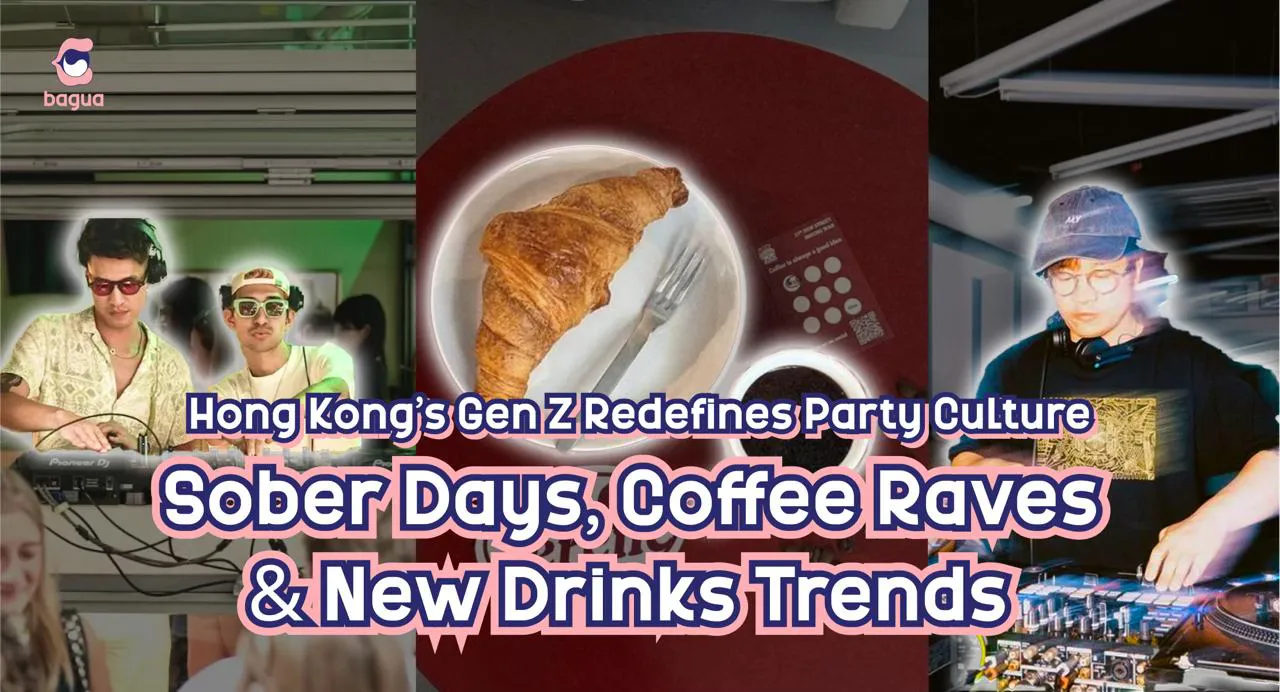
Hong Kong’s weekends are shifting from 4am to 4pm, as a sober-curious Gen Z discovers social energy without the hangover. Afternoon “coffee raves” and pop-up day parties, powered by DJs and pour-overs rather than pints, are surfacing as a credible alternative to late-night clubbing. Reasons stemming from part wellness, part time-shifted socialising, and increasingly, part of the city’s Food & Beverage (F&B) survival strategy post-pandemic. The premise is straightforward: keep the music, keep the community, swap the alcohol for caffeine or premium non-alcoholic pairings, and still make dinner plans after. It’s not just a niche; it’s a mood that aligns with Gen Z’s appetite for intentional experiences and productivity the morning after.
The rise of the afternoon party
The clearest local signal is the Social Club Series, which are ticketed pop-up events with themed dress codes and rotating venues revealed post-purchase, staged deliberately in daylight hours. The founders are explicit: they love the music and energy, but not the lost day after, so they designed a healthier daytime format that lets people dance, dine, and go home at a reasonable hour. Recent line-ups range from pool parties to coffee raves and rooftop functions, embedded into the city’s cafe-culture circuit rather than late-night clubs. In parallel, cafes themselves have pivoted to hosting DJs, community runs, and vintage markets as they adapt to rising rents, fluctuating foot traffic, and consumers splitting weekends across the Hong Kong border, with daytime parties becoming a new revenue stream and social anchor.
Drinks that fit the moment: premium, precise, and often tea-led
The drinks that shine on this new occasion are the main event. Sparkling tea has emerged as the hero category—textural, food-friendly, ritual-rich, and familiar to Hong Kong palates—positioned less as a “mocktail” substitute and more as a parallel to wine. Saicho, founded by a Hong Kong–British team, has been at the forefront of this shift, placing single-origin sparkling teas such as Jasmine, Hojicha, and Darjeeling onto tasting flights and wine lists in Michelin-starred restaurants, including in Hong Kong. The brand’s strategy is to court sommeliers, speak the language of terroir and tannin, and then show a pairing range which mirrors how natural wine built credibility a decade ago, and it’s finding traction across Asia alongside the UK and Middle East expansions. Local craftsmanship is a parallel draw. Mindful Sparks, brewed and bottled in Hong Kong, has carved out a premium non-alcoholic lane through sparkling teas and culinary pairings, with a partnership as Official Tea Partner to the MICHELIN Guide Hong Kong & Macau 2024 and listings across fine-dining rooms. The brand’s aims for mindfulness, quality certifications, and hospitality-first credibility fit a generation that wants better, not simply less, and give chefs a versatile alcohol-free canvas at lunch and afternoon seatings. For operators, these offerings do double duty: they elevate the experience for non-drinkers and create check-raising, margin-friendly options at times when alcohol sales might otherwise be muted.
Why Gen Z is choosing sober-curious days
Three motivations recur in both reporting and on-the-ground reality. First, health: avoiding hangovers, preserving sleep, and reducing anxiety around alcohol are recurring reasons, with the “sober curious” ethos now a mainstream identity marker rather than a fringe stance. Second, time:daytime formats let people stack social plans and keep Monday clear, a point the Social Club Series articulates directly, reflecting a pragmatic Hong Kong sensibility around work-life rhythm. Third, taste and ritual: tea-forward pairings and chef-led non-alcoholic programmes give abstainers something sophisticated to hold, matching the narrative depth of wine without compromising clarity, productivity, or fitness goals. However, there are alcohol options available for those looking for a punch. Coffee raves are “alcohol-optional”, not prohibitionist, and sparkling tea menus often sit alongside wine lists rather than replace them. What’s changing is the default: an afternoon party needn’t assume a cocktail, and a fine-dining progression needn’t assume a pairing of alcohol for each course.
On-trade impact: menus, margins, and the cafe-as-club
For venues, the shift is operational as much as cultural. Cafes and casual restaurants are programming DJ-led afternoons and gallery-style pop-ups, turning dead zones into ticketed moments and community spots while sidestepping the licensing and staffing burdens of late-night service. Daytime hospitality economics look different: no bouncers, fewer security concerns, faster turn times, and a new upsell path via premium non-alcoholic bottles, tasting flights, and chef-sommelier collaborations around tea. Menus are changing to match. You’ll see single-origin sparkling teas sold by the bottle, set non-alcoholic pairings on tasting menus, and coffee programmes designed to keep energy steady with good pour-overs, milk for texture, and sensible caffeine pacing over a few hours. In Hong Kong, it all makes sense because tea is part of daily life. Jasmine lifts delicate seafood, hojicha adds depth to roasted dishes, and Darjeeling brings tannin for rich sauces.
Knock-ons for the alcohol industry
This shift toward daytime, sober-curious socialising won’t topple Hong Kong’s alcohol market, but it does change old habits about when and what people drink. Early and mid-afternoons, once quiet for anything beyond a light beer or simple spirit, are now seeing competition from premium no/low drinks and coffee-led events. For importers and bars, that means tweaking the range: carry true zero-alcohol items with real food value, partner with tea houses and coffee roasters, and run mixed events where a small alcohol list sits alongside a stronger non-alcoholic offer. Sparkling tea and other wine-style alternatives, especially those used in Michelin venues, may take some moments once owned by Champagne or wine. Brands that get the shift are adapting. They’re launching non-alcoholic lines or teaming up with tea makers to create new serving rituals and pairings. Meanwhile, premium non-alcoholic lists are gaining status and loyal fans.
A new social shift
What’s compelling about Hong Kong’s version of this shift is how it blends cosmopolitan appetite with local texture. The cafe-as-club idea borrows from Europe and New York, but the drinks culture is unmistakably Hong Kong—elevated tea, chef collaborations, and a hospitality scene that prizes precision as much as hype. The Social Club Series and its peers show how quickly formats can adapt when there’s a generational tailwind, a platform economy for ticketing, and venues hungry for fresh daytime revenue. For Gen Z, it is about keeping the music and the community and skipping the foggy next day.